
Therapy as a Clinical Possibility
How to Change Your MindThis thread follows psychedelic treatment from historical precedents through cancer care, addiction and depression trials, while keeping uncertainty and methodological limits in view.
increasing Bearing strength in each event
 decreasing
Bearing strength in each eventdecreasingA Historical Precedent
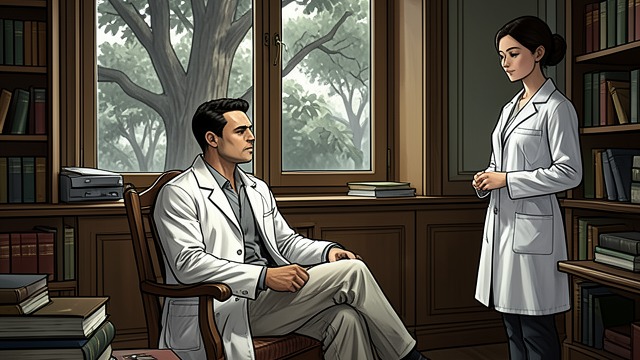
A Single Session’s Ambition
Treatment through experience
Early therapists explore whether intense, guided sessions can change entrenched psychological patterns. Alcohol dependence becomes a prominent testing ground.
A complicated record
Reports of benefit coexist with uneven methods and contradictory replications. The history leaves useful hypotheses but not simple proof.
The Cancer Studies
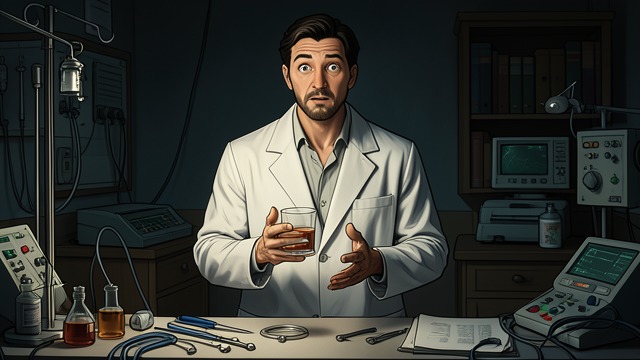
Facing Existential Distress
A renewed target
Studies at NYU and Johns Hopkins test whether psilocybin can ease anxiety and depression in people with cancer. The sessions pair medication with preparation, guides, and follow-up.
Unusually strong signals
Many participants report less fear and improved well-being. The results revive a question first raised by earlier researchers: whether an altered perspective can change the experience of dying.
A Patient Reframes Death

A Journey in the Treatment Room
Love and the edge of loss
Patrick Mettes experiences birth, connection, and a brief approach toward death during his guided psilocybin session. The experience shifts his attention from fear toward the life he still shares with Lisa.
A changed interval
He does not stop wanting to live, but his relationship to dying changes. His final months become more patient and emotionally open, even as the cancer progresses.
Addiction Trials

Breaking a Repeating Story
New studies revisit old hopes
Research teams test psilocybin for smoking and alcohol dependence, pairing sessions with behavioral preparation. Participants sometimes describe habits losing their importance within a widened perspective.
Promise remains preliminary
Small studies show encouraging signals, not established cures. Outcomes depend on intention, support, and the person’s response, so the treatment cannot be reduced to a pill alone.
Depression and Expansion
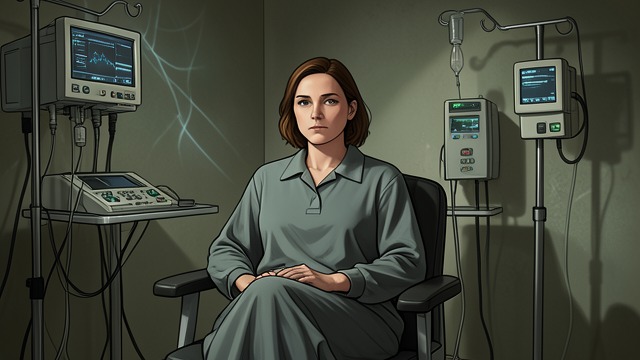
Testing a Broader Use
A feasibility study
Robin Carhart-Harris and colleagues report rapid improvement for many participants with treatment-resistant depression. Follow-up shows that relief may persist for some and fade for others.
A larger question
Regulators encourage more expansive depression research, while the evidence remains early. The clinical prospect is powerful, but its durability, reach, and best use remain unresolved.
During the 1950s and 1960s
From the 2010s to 2016
During Patrick Mettes’s 2011 session
From the 2010s into the mid-2010s
From 2016 through early 2017
